
Illustrative example. Images are generated demonstrations, not documentation of an actual customer, staff member, or completed repair. Repair scope and outcomes depend on an in-person assessment.
About this walkthrough
This is an illustrative scenario explaining a repair decision process. It is not a real customer story, a repair performed by First Choice, or a guarantee of an outcome. Any accompanying demonstration imagery is illustrative rather than evidence of completed work.
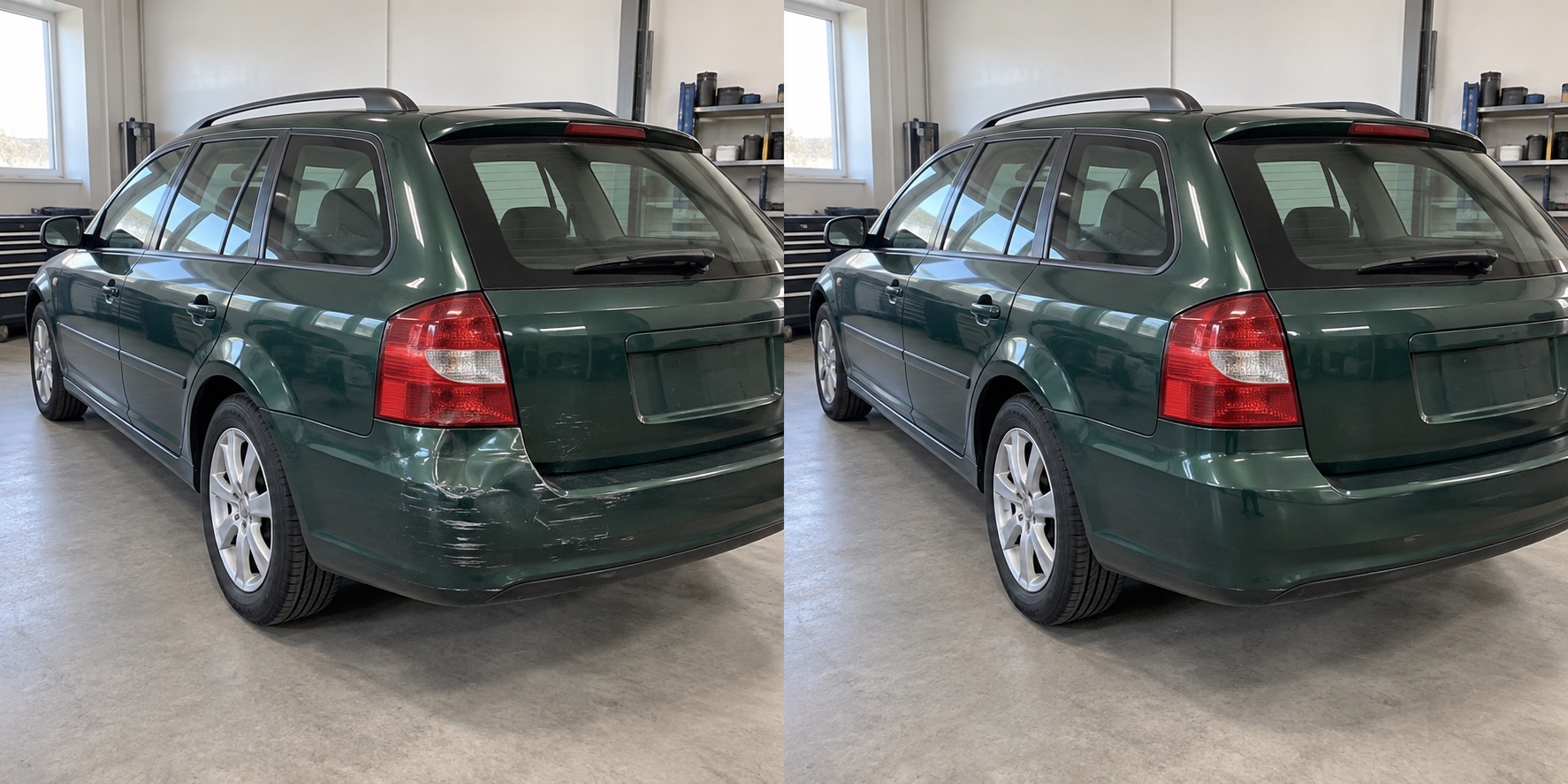
Before: the information available
Consider an initial estimate based on visible front-end damage. During a separately authorized assessment, a concealed affected component becomes accessible. The new observation was not available in the original exterior photo set.
The assessment and decision
The service contact would explain the finding, provide relevant evidence, and prepare the proposed scope change. The customer could ask about the work, timing, and unresolved payment questions before giving the required authorization. The revised document would remain linked to the original estimate.
After: what the record should explain
The final file would connect the finding, approved change, and completed work. That record would explain why the final scope differs from the first proposal. This walkthrough illustrates transparent documentation; it does not describe an actual claim, charge, or customer event.
Apply the questions to your vehicle
Every vehicle and damage pattern needs its own assessment. Use this sequence to organize observations and ask clear questions about scope, capability, authorization, and documentation. Contact the shop to confirm the appropriate appointment and the specific work it can accept.
Let’s talk about your vehicle.
Every repair starts with the details. Tell us what happened, and contact the shop to confirm the right next step for your vehicle.
Request an estimate