
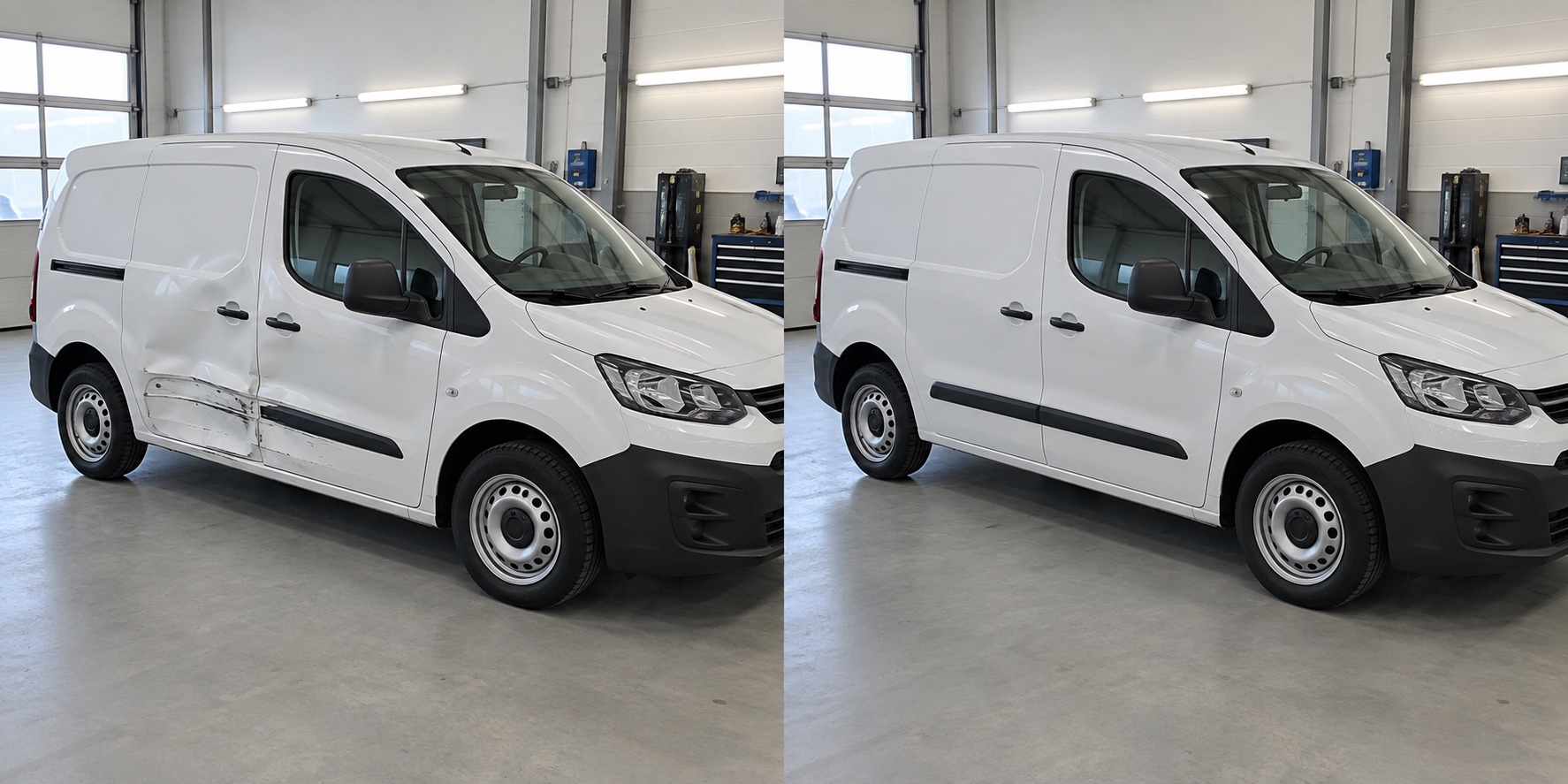
Illustrative example. Images are generated demonstrations, not documentation of an actual customer, staff member, or completed repair. Repair scope and outcomes depend on an in-person assessment.
About this walkthrough
This is an illustrative scenario explaining a repair decision process. It is not a real customer story, a repair performed by First Choice, or a guarantee of an outcome. Any accompanying demonstration imagery is illustrative rather than evidence of completed work.
Before: the information available
Consider a business vehicle reported with damage by one driver and collected later by another employee. The intake file identifies the unit, the new observations, known earlier issues, and the person authorized to make repair decisions.
The assessment and decision
Before work, the business and facility would confirm the scope, communication method, approval process, and any separate arrangements. Timing would depend on the actual vehicle and findings. The relationship would not imply unconfirmed credit terms, priority scheduling, or transport services.
After: what the record should explain
The completed invoice and care guidance would be matched to the correct unit and passed to the responsible user. The business would retain the record for later questions. This is a hypothetical workflow explanation, not a representation of an existing commercial customer.
Apply the questions to your vehicle
Every vehicle and damage pattern needs its own assessment. Use this sequence to organize observations and ask clear questions about scope, capability, authorization, and documentation. Contact the shop to confirm the appropriate appointment and the specific work it can accept.
Let’s talk about your vehicle.
Every repair starts with the details. Tell us what happened, and contact the shop to confirm the right next step for your vehicle.
Request an estimate