
Illustrative example. Images are generated demonstrations, not documentation of an actual customer, staff member, or completed repair. Repair scope and outcomes depend on an in-person assessment.
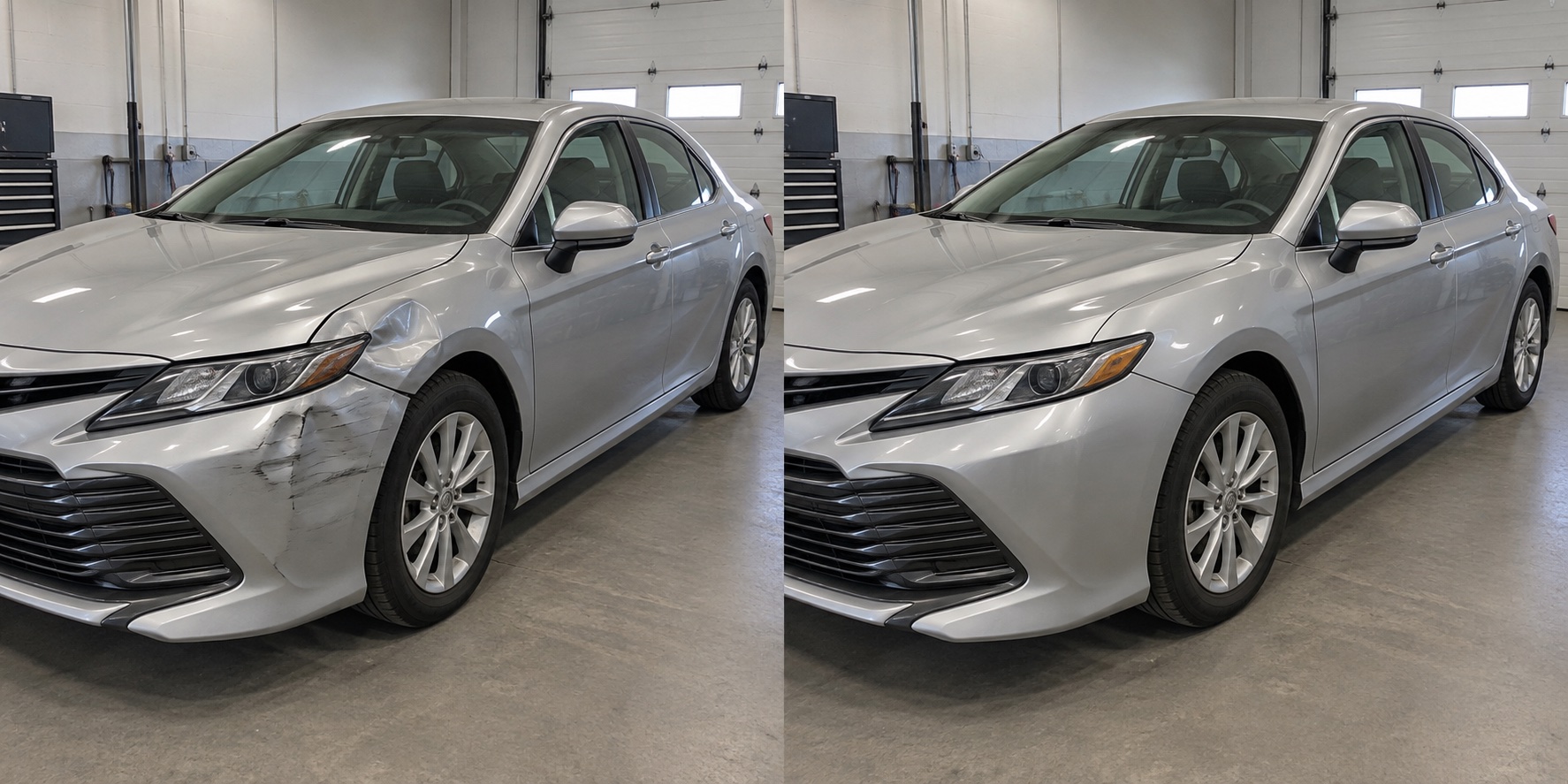
About this walkthrough
This is an illustrative scenario explaining a repair decision process. It is not a real customer story, a repair performed by First Choice, or a guarantee of an outcome. Any accompanying demonstration imagery is illustrative rather than evidence of completed work.
Before: the information available
Consider a vehicle with a visible scuff and a loose edge on its rear bumper cover. The owner also reports that a parking alert changed after the contact. The visible mark is only one observation; the changed fit and alert belong in the same intake record.
The assessment and decision
The proposed assessment would distinguish finish damage from damage to the cover, mounting points, or nearby equipment. No method or part choice is assumed before that assessment. The written plan would explain whether refinishing, component repair, replacement, or related evaluation is appropriate.
After: what the record should explain
An appropriate completion review would compare the agreed cover work, fit, and any relevant equipment operations with the final invoice. Supporting records would describe actual completed work. The illustration shows the planning logic; it does not claim an observed result, customer, price, or completion time.
Apply the questions to your vehicle
Every vehicle and damage pattern needs its own assessment. Use this sequence to organize observations and ask clear questions about scope, capability, authorization, and documentation. Contact the shop to confirm the appropriate appointment and the specific work it can accept.
Let’s talk about your vehicle.
Every repair starts with the details. Tell us what happened, and contact the shop to confirm the right next step for your vehicle.
Request an estimate